Understanding CBT
CBT, or Cognitive Behavioral Therapy, is a type of therapy that focuses on how our thoughts, feelings, and behaviors are interconnected. It is widely considered the "gold standard" of modern psychotherapy because it is practical, goal-oriented, and backed by decades of clinical research.
The core premise of CBT is simple yet life-changing: It isn't just what happens to us that causes distress, but how we interpret those events. By identifying and shifting negative thought patterns, we can change our emotional response and take control of our actions.
A Present-Focused Approach
Developed in the 1960s by psychiatrist Aaron T. Beck as he worked with depressed patients, CBT quickly evolved into one of the most researched and widely used forms of psychotherapy today. Beck noticed that his patients experienced rapid streams of negative "automatic thoughts" that distorted reality and fueled emotional suffering. He developed "cognitive therapy" to address these directly, later integrating behavioral techniques to create what is now known as Cognitive Behavioral Therapy. Influences from Albert Ellis's Rational Emotive Behavior Therapy also helped shape the approach.
Unlike traditional talk therapies that emphasize childhood experiences and unconscious conflicts, CBT is present-focused, structured, goal-oriented, and usually short-term (often 8–20 sessions). Today, CBT is recommended as a first-line treatment by major health organizations worldwide.
The Cognitive Model
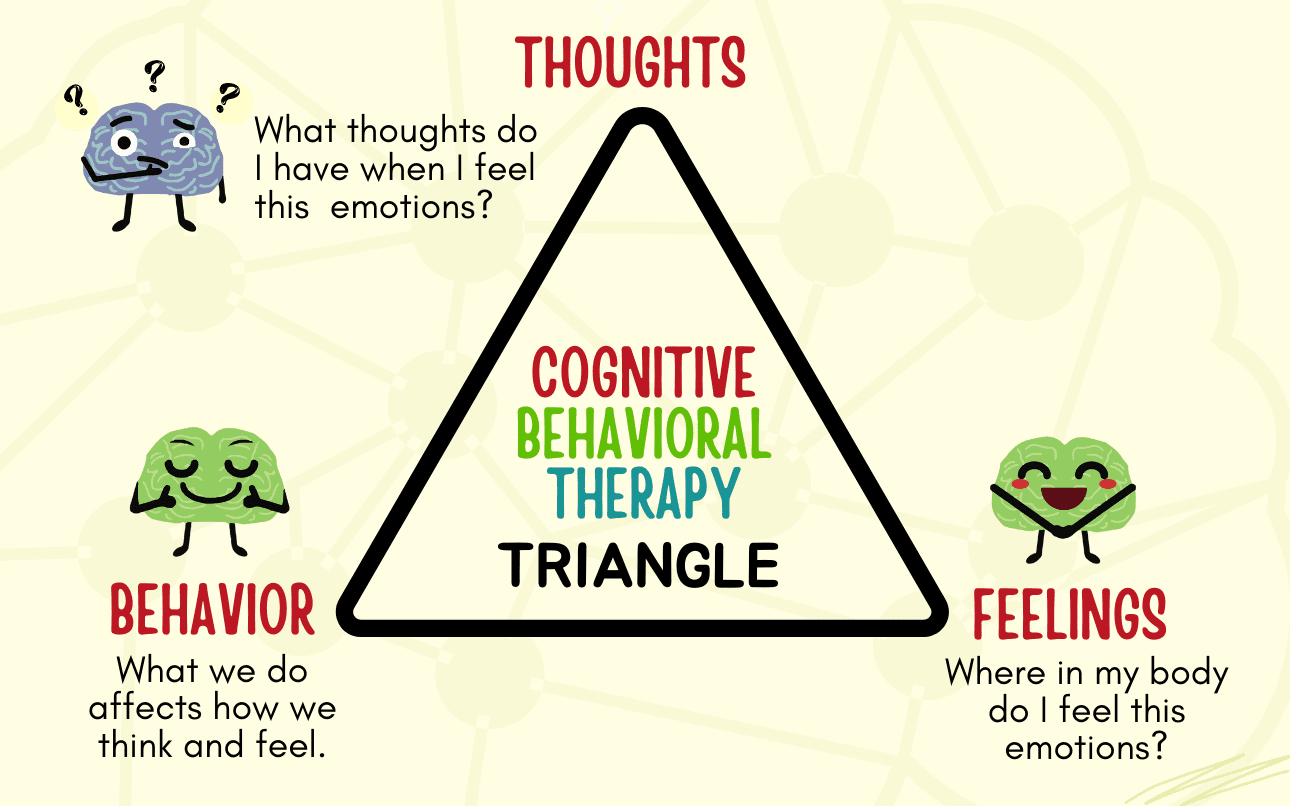
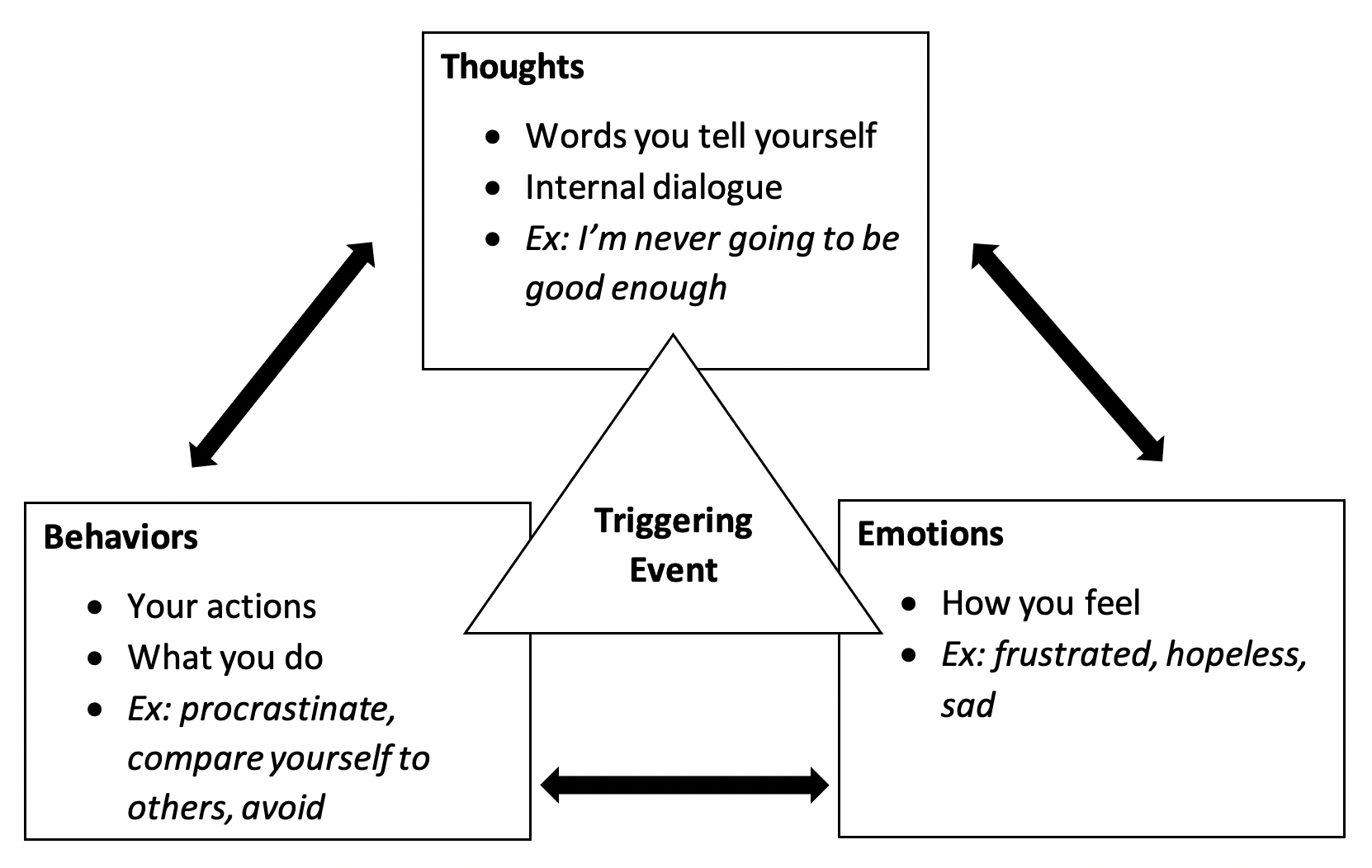
At the heart of CBT lies the cognitive model: our interpretations of events—not the events themselves—primarily determine how we feel and act.
This relationship is often illustrated as a triangle connecting thoughts, feelings, and behaviors, where change in any one area can positively affect the others.
How CBT Works
In a traditional CBT setting, you learn to identify "cognitive distortions"—those pesky, automatic negative thoughts like "I'm not good enough" or "Everything is going to go wrong." Once identified, CBT gives you the tools to:
- ReframeChallenge those thoughts with evidence-based logic.
- PracticeEngage in behavioral experiments to break old habits.
- RecoverBuild a mental toolkit to handle stress, anxiety, and depression in real-time.
Cognitive Distortions
Common cognitive distortions targeted in therapy include all-or-nothing thinking ("I'm a total failure if I make one mistake"), catastrophizing ("This small setback means everything will fall apart"), and overgeneralization ("I always mess things up"). Therapists use collaborative, Socratic questioning to help clients examine evidence for and against these thoughts, replacing them with more balanced, realistic alternatives.
Behavioral Techniques
For depression, behavioral activation encourages patients to schedule enjoyable or meaningful activities to break cycles of withdrawal. For anxiety disorders or phobias, gradual exposure helps individuals confront feared situations in a controlled way, reducing avoidance. Other tools include thought records, behavioral experiments, and relaxation training. Modern variants incorporate mindfulness to prevent relapse in depression.
Gold-Standard Treatment
CBT has demonstrated strong effectiveness across a wide range of conditions. It is a gold-standard treatment for anxiety disorders, major depression, obsessive-compulsive disorder (OCD), post-traumatic stress disorder (PTSD), eating disorders, insomnia, chronic pain, and even substance use issues.
Thousands of clinical trials—more than 2,000 according to the Beck Institute—have shown medium-to-large effect sizes, with benefits often matching or exceeding medication for mild-to-moderate depression and showing lower relapse rates. It works well in individual, group, and digital formats (iCBT apps), making it accessible and cost-effective.
Learn More About CBT
Limitations & Conclusion
Like any therapy, CBT has limitations. It requires active participation and homework completion, so it may be less suitable for individuals with severe cognitive impairments, acute crises, or those who prefer exploring deep-rooted emotional or relational issues. Some critics argue it can overlook cultural, societal, or biological factors, though culturally adapted versions have been developed to address this. It is often most powerful when combined with medication for severe cases.
In conclusion, Cognitive Behavioral Therapy stands out as a practical, evidence-based approach that equips people with lifelong skills to understand and manage their minds. By teaching individuals to become their own therapists, CBT not only reduces current symptoms but also builds resilience against future challenges. As mental health awareness continues to grow and digital delivery expands, CBT's adaptable, collaborative nature ensures it will remain a cornerstone of effective psychological care for years to come.
Meet Serenity AI: Your Personal CBT Companion
While traditional therapy is effective, it isn't always accessible when you need it most. That is why we built Serenity AI, an advanced AI-powered platform designed to bring the benefits of CBT directly to your pocket. Whether you are dealing with daily stress or looking to improve your overall mental resilience, Serenity AI uses evidence-based techniques to help you feel better, faster.
Key Features of Serenity AI
- 24/7 Conversational Support: Unlike a therapist with office hours, Serenity AI is available whenever you need to talk—whether it's 3:00 PM or 3:00 AM.
- Interactive Thought Records: Easily log your thoughts and let the AI guide you through the process of challenging and reframing them.
- Personalized Exercises: Receive curated CBT techniques and mindfulness practices tailored to your specific mood and goals.
- Mood Analytics: Visualize your progress over time with data-driven insights into your emotional patterns.
- Secure & Private: Your mental health is personal. We use industry-leading encryption to ensure your conversations remain confidential.
Why Choose Serenity AI for Your CBT Journey?
- 1Zero Judgment: Many people find it easier to be honest with an AI. Serenity provides a safe, stigma-free space to express your darkest thoughts.
- 2Immediate Relief: In moments of high anxiety or panic, Serenity AI provides instant grounding techniques and guided breathing to help you regain calm.
- 3Affordability: Get the benefits of cognitive behavioral techniques at a fraction of the cost of traditional private therapy sessions.
- 4Consistency: Serenity AI helps you stay on track with gentle reminders and daily check-ins, ensuring that your mental health becomes a habit, not a chore.
Start Your Journey Today
Mental wellness shouldn't be a luxury. By combining the proven logic of Cognitive Behavioral Therapy with the accessibility of artificial intelligence, Serenity AI empowers you to become the architect of your own happiness.
Ready to change the way you think?
Start Free